
********MAJOR SPOILERS********
The ending of Glass is built to frustrate one expectation and satisfy a different one. If you are waiting for the trilogy to explode into a giant public superhero spectacle, the movie keeps swerving away from that. If you are waiting for the truth to get out, that is the payoff it finally chooses.
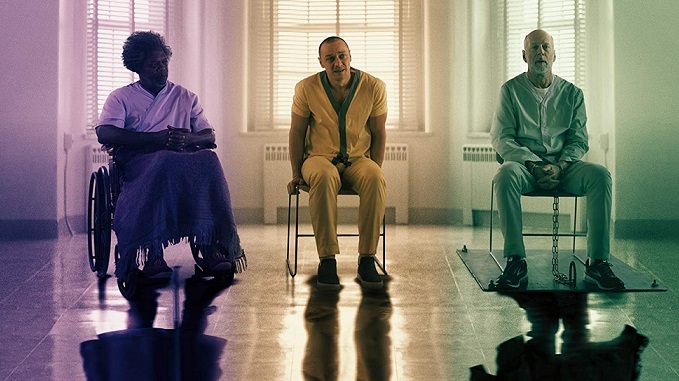
The last movement begins once Elijah gets the machinery moving. He manipulates the hospital. Plays Dr. Staple’s system against itself. Pushes Kevin toward transformation and David toward pursuit. For a little while, the movie even toys with the idea of a huge showdown at the Osaka Tower, because that is exactly the sort of comic-book climax audiences expect at this point.
But Elijah is doing something sneakier than building a tower fight. He is making sure the confrontation happens at all, and making sure it gets seen. The Beast breaks loose. David goes after him. Security floods the grounds. Dr. Staple tries to contain everything before it turns into public proof. The movie’s energy spikes right there because it feels as though myth is about to break containment.
Then Shyamalan makes the crucial choice. The fight happens on the lawn at Raven Hill. Wet grass. Security lights. Institutions all around them. No skyline. No triumphant superhero framing. David and the Beast go at each other in a space designed to make them look small, local, manageable. That is the point. The system wants wonder reduced to a security incident.
From there the ending turns brutal fast. Casey reaches Kevin and calls him back for one fragile moment, just enough for the real Kevin to surface. And the instant he surfaces, Dr. Staple’s people shoot him. That is how the film treats the return of vulnerable humanity. Not with ceremony. With tactical elimination.
David survives the Beast only to be dragged down by the Clover team. He is drowned in a puddle while Staple watches. It is a humiliating death on purpose. Shyamalan wants the audience to feel how institutions erase extraordinary people. Not in a blaze of glory. In a controlled act of minimization.
Elijah’s ending is the key to all of it. He is beaten badly. Dying. But he has already won the argument he actually cared about. He tells his mother that the point was never the tower. The point was exposure. He arranged for the surveillance footage to leave Raven Hill. Then he dies knowing the evidence is on its way out.
That sets up the real final scene. Joseph Dunn, Casey Cooke, and Mrs. Price gather in a transit hub and watch the footage spread. The world finally sees David’s strength. Kevin’s transformations. The reality Dr. Staple’s organization wanted buried. No more private certainty. No more maybe. The secret is public now.
So the ending, in play-by-play terms, goes like this: Elijah engineers the breakout, David and the Beast clash on the grounds, Kevin is briefly brought back and then killed, David is drowned by Staple’s people, Elijah reveals he has already sent the footage out, and Joseph, Casey, and Mrs. Price watch the truth reach the world. The bodies fall. The revelation survives. For this trilogy, that is the victory.