
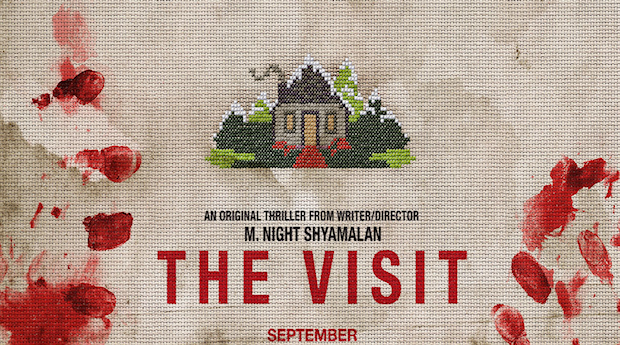
People call The Visit a comeback movie, and I understand why. It was the first M. Night Shyamalan film in years that made audiences lean forward again instead of folding their arms. It was tense, funny in a weird and dangerous way, and built around the kind of slow-burn unease he had once made look effortless.
But “comeback” can make the whole thing sound cleaner than it was.
The Visit did not arrive because Hollywood suddenly remembered how talented Shyamalan was. It arrived because he got backed into a corner, stripped the scale away, mortgaged comfort for freedom, and made a movie that felt like him again. The Blumhouse connection matters here, but not in the simple rescue-story way people sometimes tell it. Jason Blum did not hand Night the idea. He did something more useful. He recognized that the path back was smaller, riskier, and far less decorated than the one Night had been walking.
That is one reason The Visit still feels important. It put Shyamalan back in good standing, yes, but it did something more important too. It forced him back into his own sensibilities, where the rooms are tighter, the family wounds are closer to the surface, and the terror depends less on machinery than on rhythm, shame, silence, and one awful feeling settling into your stomach a few seconds before the characters catch up.
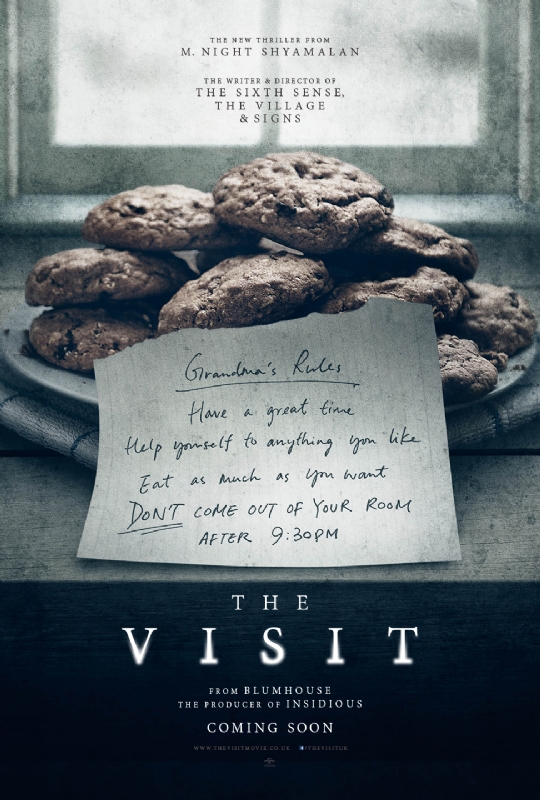
The Wall He Hit
By the time The Visit was made, the story around Shyamalan had turned ugly. The early run, The Sixth Sense, Unbreakable, Signs, and The Village, had made him seem almost unnervingly self-possessed. Then came the years when the conversation hardened. The Happening became a punchline. The Last Airbender and After Earth made him look, at least from the outside, like a filmmaker caught in a scale that no longer served him.
In a later Vulture interview, Shyamalan spoke with unusual bluntness about that period. He said people kept asking what he wanted to do, only to respond with some version of “How about this instead?” He also admitted that he had drifted into making films he knew could get made, not necessarily films he most needed to make. That is a sharp distinction, and you can feel it when you look at what came next.
He did not answer that slump with a larger spectacle or a reputation-management exercise. He answered it by going the other direction. According to both CNBC and Vulture, he took out a $5 million loan against his house to self-finance The Visit. There is something almost shockingly intimate about that fact. This was not a director cautiously dabbling in a smaller lane. This was a filmmaker putting his own home on the line to make something modest enough to breathe.
And even then, it did not go smoothly.
Shyamalan told Vulture that he showed an early cut to a theater full of distributors only six weeks after shooting, thinking someone would buy it and spare him financial ruin. Instead, they all passed. He described that moment as the bottom dropping out. What came next matters just as much as the rejection itself. He went back into the editing room. Not to invent a new movie from scratch, but to make one moment better, then another, then another.
The Movie Was Smaller on Purpose
Budget mattered, but discipline was the real point.
The Visit is a found-footage-adjacent thriller about two children sent to spend a week with grandparents they have never met. It is domestic. A little humiliating. Deeply vulnerable in the way only family stories can be. The premise is not built around global stakes or elaborate lore. It is built around children trying to stay polite while something is very, very wrong.
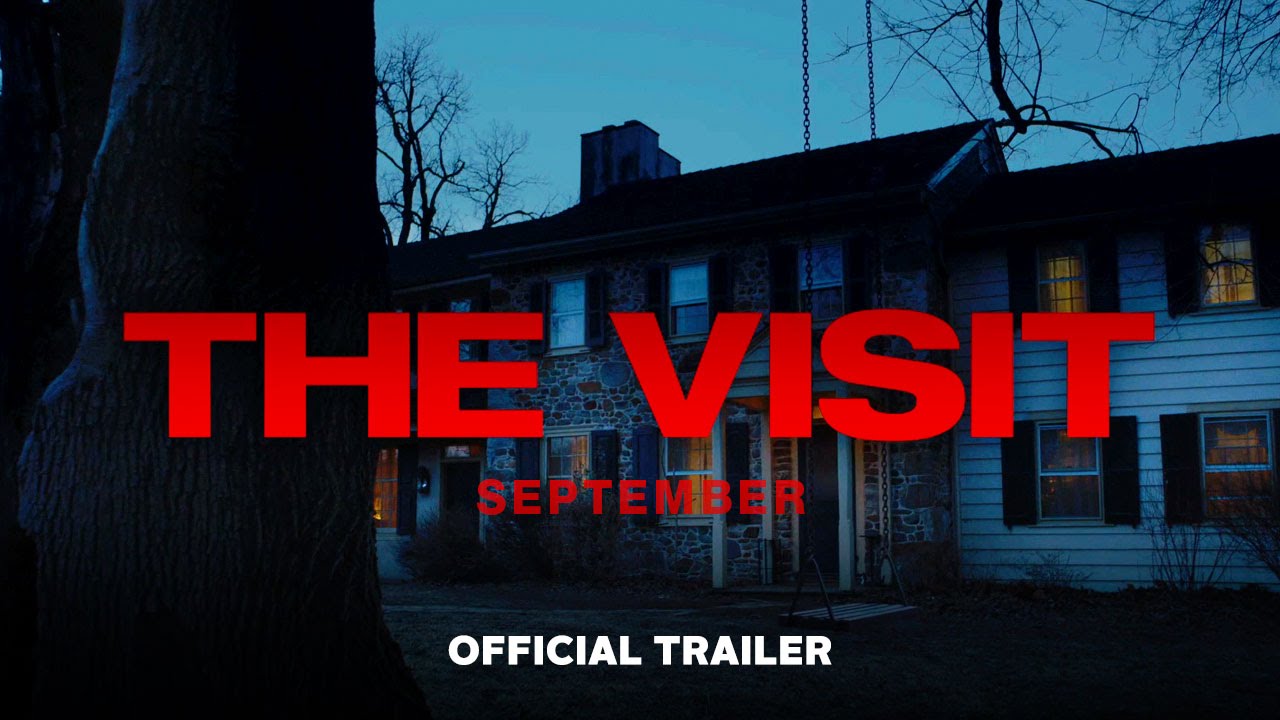
That smaller framework gave Shyamalan a different kind of control. In a 2015 interview with Geeks of Doom, he talked about finding a Pennsylvania farmhouse in foreclosure and renting it for months, which let him physically live with the location during prep. He could walk the rooms, study the stairs, test the angles, and work out how the camera would move through that space long before the pressure of a full production day closed in. The Visit feels spatially precise even while it pretends to be messy. The movie has the anxious intimacy of found footage, but it is still being shaped by a filmmaker who storyboards, calibrates, and obsesses over where dread should land.
It also let him get closer to one of his oldest interests: family as the engine of genre. During a Comic-Con conversation covered by Deadline, Shyamalan said all of his films are dramas masquerading as genre pieces, and described The Visit specifically as a story about forgiveness in a family. That sounds simple until you remember how much emotional rot sits under the movie’s premise. These children are walking into a generational wound their mother never healed, disguised as a creepy house. The horror works because the family fracture is already there before Nana ever starts scratching at the walls.
That emotional structure is one reason the film does not play like a disposable exercise. It is mischievous, yes, and sometimes gloriously tacky in its nerve. Tyler’s jokes, Becca’s camera-conscious seriousness, the queasy comedy of elderly bodies behaving in alarming ways, all of that gives the movie a crooked grin. But under it is a story about estrangement, shame, and the dangerous hope that a broken family might still be repairable if everybody will just stay in the room long enough.
Enter: Blumhouse
Jason Blum had been trying to get Shyamalan interested in the Blumhouse method before The Visit was ready. That part of the story is unusually revealing because it shows how much the collaboration depended on timing.
In both MovieWeb and Deadline, Blum describes repeatedly pitching Shyamalan on the low-budget Blumhouse model, even flying to Philadelphia to make the case in person. Blumhouse had already built its name on a very particular bargain: keep costs low, give directors real room, do not bury the movie under layers of defensive studio meddling. As a 2014 Collider report noted when Universal and Blumhouse deepened their partnership, that model had already become one of the most profitable engines in modern horror.
But when Blum was making those early overtures, Shyamalan was still operating in a different register. He listened politely. Then he moved on.
The breakthrough came after Night had already made the movie himself. In the MovieWeb interview, Blum recalled getting a call from him: “I did it.” What he meant was that he had finally made the kind of low-budget movie Blum had been urging him toward. That sequence matters. Blumhouse did not tell Shyamalan who to be. Shyamalan, under pressure and with very few comforting options left, rediscovered something essential on his own. Blumhouse then became the most natural partner for that rediscovery.
And Blum responded exactly the way you would want a producer to respond. He did not flatten the film into a safer, blander object. He loved the fact that it was off-grid and personal. In the same MovieWeb conversation, Blum said the best part was how protected the filmmaking had been, with no outside influences while Night was making it. That is not a minor detail. For Shyamalan, whose best work has often come from conviction rather than compromise, that kind of protection was not a luxury. It was the condition that made the movie possible.
Blumhouse’s influence showed up in the finishing process, too. Blum said they screened the movie, talked through what was and was not working, tried ideas, and even did additional photography. Because of the mockumentary format, those refinements could be done relatively cheaply. That is one of the quiet advantages of the collaboration. The film could still evolve after Blum entered the picture, but it could do so without turning into an industrial monster.
Universal’s role fits neatly into that story as well. By then, Blumhouse already had a strong home base there, and Universal ultimately distributed the film. So the partnership that emerged around The Visit was not some faceless studio rescue. It was a very particular chain: Shyamalan takes the first creative and financial leap himself, Blumhouse recognizes the shape of what he has made, and Universal provides the runway to release it widely.
The Tonal Problem Had to Be Solved
One of the most revealing parts of The Visit story is that the version audiences know was not the first version Shyamalan cut.
He told MovieWeb that there was an “arthouse cut” first, and later explained to SYFY Wire that this earlier version was more esoteric, stranger in its rhythms, less committed to a central genre line. In the Vulture interview, he also described pulling out odd, Lynchian music cues after distributors failed to respond, realizing he needed to honor the thriller first.
That choice mattered.
The finished film still has humor. Quite a lot of it, actually. It has Tyler’s compulsive silliness, Becca’s documentary earnestness, and a streak of discomfort so sharp it almost becomes comedy by reflex. But the movie works because it never treats the jokes as permission to stop tightening the screws. Shyamalan and Blum both talked in 2015 about how laughter and fear could work together if the drama underneath stayed sturdy. That is exactly what the final cut understands. The humor lowers your guard. The family dynamic keeps you invested. The horror then gets to move in closer than it would have otherwise.
Shyamalan also spoke at Comic-Con, in the Deadline report, about leaving the score out of the film almost entirely. In The Visit, sound effects become the score. That decision gives the movie one of its nastiest strengths. Instead of music warning you how to feel, the house does it. A scrape. A breath. A voice from another room. A body moving where it should not be moving. The silence is not neutral. It stalks.
Why The Visit Began to Make Things Right for Shyamalan
The most useful way to think about The Visit is not that it restored some imaginary perfect version of M. Night Shyamalan. It did something more practical than that. It reconnected him to a working method that fit him.
Small budget. Strong point of view. Family wound at the center. Formal control disguised as something looser. Humor used as misdirection, not escape. A thriller built around behavior rather than bloat.
Once he found that lane again, the path forward became easier to see. Split does not land the same way without The Visit proving that Night could make a sharp, nasty, audience-pleasing movie outside the machinery that had started swallowing him. The latter run, Split, Glass, Old, Knock at the Cabin, even Trap, makes more sense when you look at The Visit as the film where he relearned how much power there is in keeping the frame tight and the psychology mean.
The Blumhouse collaboration helps explain it too. It was not about smoothing him into a house style. If anything, it worked because the Blumhouse model created room for his own instincts to come back into focus. Freedom, limitations, and a producer who understood that the movie did not need to be made bigger to be made better, that combination turned out to be exactly what this stage of his career required.
There is something fitting about the fact that The Visit is built around children being sent into a family situation that looks wholesome from a distance and grows more frightening the longer they stay. Shyamalan was, in his own way, doing something similar with his career at that moment. He had to walk back into an intimate space, face what had gone wrong, and trust that if he stayed with the discomfort long enough, he might find the truth of the thing again.
He did.
And that is why The Visit still feels bigger than its budget, bigger than its farmhouse setting, and bigger than the easy comeback label that usually gets pinned to it. It was the movie where M. Night Shyamalan remembered the size and shape of his own hands.

Be the first to comment