
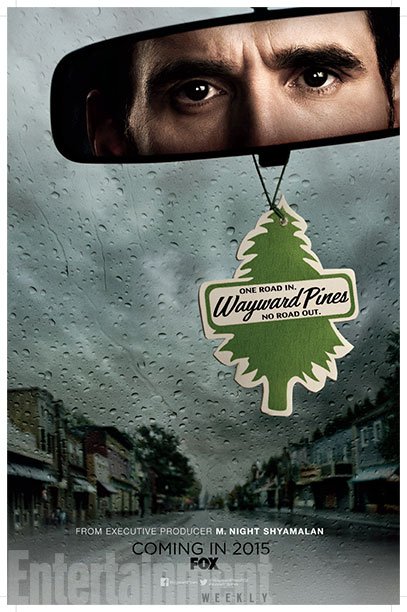
If you have ever heard fans argue about Wayward Pines, the split usually shows up fast. A lot of people love season 1 and get shakier the moment season 2 enters the conversation. That divide is real, but it is also understandable. The show did not simply lose momentum. It changed shape.
Season 1 ran on mystery
The first season had a built-in advantage. It could withhold. It could tease. It could let Ethan Burke move through a town that felt wrong in ways he could not yet name. That structure gave the series its eerie pull. The audience was learning the rules at the same pace he was, and M. Night Shyamalan’s involvement with the pilot helped set that tone early. There was dread in the air, and there was also curiosity. You wanted to know what this place was.
Once the show answered that question, the engine had to change.
Season 2 traded revelation for maintenance
That is the cleanest way to put it. Season 1 asks, “What is Wayward Pines?” Season 2 asks, “How does this place survive now?” Those are not the same kind of question, and they do not create the same kind of week-to-week electricity.
The cast shift mattered too. Matt Dillon’s presence gave season 1 a steady center. Once the show moved on without him, it naturally felt different. The focus widened. The colony politics became more prominent. The abbie threat was still there, but the emotional experience changed from paranoid discovery to the grind of trying to keep the place running.
Once the mystery was spent, the show had to change
Another part of the debate is structural. Once a story burns through the cleanest stretch of its source hook, it has to either deepen or expand. Wayward Pines tried to expand. Some fans were up for that. Others missed the tighter, stranger, more claustrophobic version of the show.
That does not automatically make season 2 a mistake. It just means it was doing a different job. If you came back hoping for another full season of locked-box mystery, the pivot could feel like a betrayal. If you were curious about what daily life in that world might actually become, season 2 had something to offer.
Why people still argue about it
I think it comes down to what people loved first. If you loved the mood, the uncertainty, and the slow drip of revelation, season 1 is hard to top. If you liked the premise enough to want the world explored further, season 2 is easier to defend. The argument is really about what Wayward Pines was best at.
That is why the debate still has life. The show set up one kind of attachment and then asked viewers to transfer that attachment to a new kind of storytelling. Some made the jump. Some never wanted to.
My read on it
Season 1 is the cleaner dramatic package, while season 2 is the messier attempt to live with the consequences. I understand why fans keep favoring the first. I also think the second deserves a little more grace than it usually gets. It is less mysterious, yes. It is also more exposed. And sometimes that kind of swing is worth talking through instead of flattening it into “good season, bad season” shorthand.

first of all let’s be clear, the producers didn’t make a season 2 which was tossed in the trash though we knew what happened. the town did not come together after the harrowing events that ended season 1. to save money we found our what transpired on the actual season 2.vai simple cheap dialogue. oops we were rubbing out of food yet there were decades of rations we saw in the end of S1. opps the soil is no good to grow food in S2.well after a nearly a decade people lived in S1, no one was concerned about fresh vegs and fruits in S1?? idiotic. oops we don’t have a doctor yet events in S2 were already years after S1. oops no adults in charge , lots of guns , bombs & ammo but no drugs or vitamins?? all that nice landscaping grass and flowers, but has soil, no garbage or bio dinos to produce fertilizer. ooos abbies ar burning or fields. what about moving dirt into the town and replace bad soil? while no greenhouses. hunting. the conflict with the town was due to food shortages. how did the meds take place in a preengineered ARK of the human race. ?? abd finally all these unwritten plots of S2, S3 begins and clearly this place though planned out with high attention to detail was vomited on by the show producers for a quick exit to save face.. to extend beyond season 1 was a disaster because they killed of Matt, his kid and all of the main characters and S1 should have ended with a womping on the Abbiex avd a celebration and a big good bye sendoff.everythink else was pointless. remember lost. a creepy mysteries can last nearly a decade. imagine lost as a single season. that’s how much someone wasted to rush to the eve of wayward pines. I suspect Matt didn’t sign a second season or wasn’t offered enough.he was the central focus. without his character the series was doomed. soooo disappointing!!!