
********MAJOR SPOILERS********
The ending of Split really does come in two separate bursts. First the movie finishes its immediate horror story. Then it suddenly opens a door into a much larger mythos. Both parts matter. Both parts land differently.
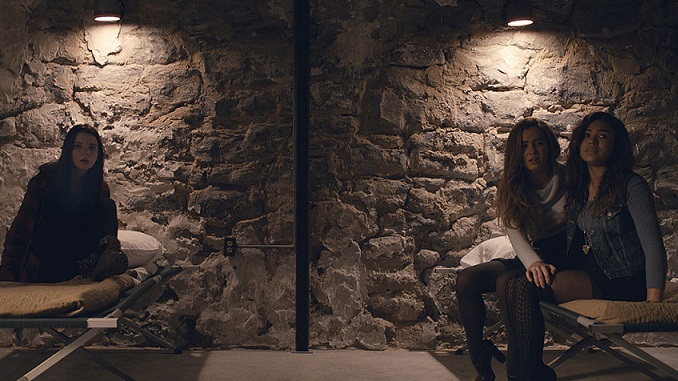
By the time the ending starts moving, Dr. Fletcher is dead, the underground space has become a maze of cages and corridors, and Casey is the only one left with any real chance of surviving. Claire and Marcia are gone. Kevin’s personalities are no longer shifting in a way that leaves much room for normal intervention. The Beast is taking over.
Casey scrambles through the compound trying to stay ahead of him. She searches for exits. Handles the shotgun. Checks locks. Tries not to panic. The whole movie has been building her as the girl who notices things other people miss, and the ending leans into that. She is not stronger than Kevin. She is more alert than the room around her.
Then the Beast fully arrives. This is where Split stops pretending it is just a grounded abduction thriller. Kevin climbs. Crashes through space in a way normal bodies should not. Moves like something half-human, half-urban legend. Shyamalan wants the audience to feel a real threshold there. The movie has crossed from personality horror into monstrous physicality.
Casey fights back when she can. Shoots when she gets the chance. Runs when she has no other choice. But the crucial turn is not that she outmuscles or outsmarts the Beast in some clean heroic fashion. The crucial turn is recognition. The Beast sees the scars on her body. Sees the marks left by years of abuse. And in the twisted spiritual logic he lives by, that makes her “broken,” which to him means purified, transformed, almost holy.
So he spares her.
That is the strangest and most revealing beat in the whole ending. Casey survives because the monster interprets her pain as sanctifying. It is not comforting. It is not noble. It is horrifying and consistent and deeply in line with the film’s obsession with damage, survival, and the warped meanings people assign to suffering.
After that, Casey is found. The immediate nightmare ends. But the movie still has one more card to turn over. We cut to the diner scene. People are watching news coverage of the crimes. They compare what happened to an older case, talk about comic-book style villains and unforgettable names, and then the camera lands on Bruce Willis as David Dunn.
That moment reclassifies the entire movie in seconds. Split is no longer just a nasty standalone thriller about captivity and trauma. It now belongs to the same world as Unbreakable. Kevin is not merely a deeply damaged criminal. He is part of a larger argument about extraordinary people, hidden identities, and what suffering does when it gets interpreted as destiny.
So the ending sequence, plainly, goes like this: Casey survives the underground chase, the Beast spares her because of her scars, help arrives, the news spreads, David Dunn appears in the diner, and the film reveals itself as a continuation of the Unbreakable universe. Survival first. Reframing second. Big final jolt on the way out.