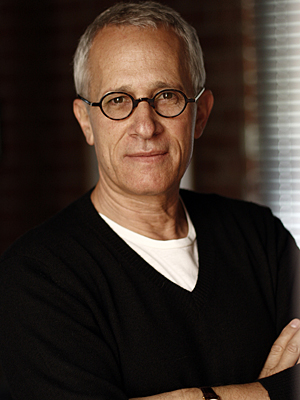
 For a long stretch, the sound of an M. Night Shyamalan movie and the sound of James Newton Howard were almost inseparable. Beginning with The Sixth Sense and running through After Earth, Howard scored eight Shyamalan features and helped give the director’s best-known era its emotional grammar. The shocks mattered. The reveals mattered. But the music is a huge part of why those films still feel haunted, mournful, intimate, spiritual, wounded, and strangely beautiful all at once.
That is the real shape of this collaboration. He was helping Shyamalan hold contradictory feelings in the same scene: fear and tenderness, grief and revelation, awe and panic, faith and doubt. When people talk about “the Shyamalan feeling” in the late 1990s and 2000s, they are talking about performances, camera placement, twists, and tone. They are also talking, whether they realize it or not, about James Newton Howard.
The eight-film run includes The Sixth Sense, Unbreakable, Signs, The Village, Lady in the Water, The Happening, The Last Airbender, and After Earth. Taken together, they form one of the defining director-composer relationships in modern genre cinema.
How the collaboration began
Howard came onto The Sixth Sense after Shyamalan had already built the film around classical temp music. In a later Collider interview, Howard said seeing the finished film for the first time was a shock in the best way. He did not guess the ending. His jaw dropped. Then he and Shyamalan had only about six weeks to build the score.
Howard later called that first experience with Night “a huge game-change” for him creatively. The comment matters because he was already a major composer by then. He was not some unknown being taught the basics. What changed was his sense of discipline. Shyamalan pushed him to think less like a composer solving one scene at a time and more like a storyteller trying to find the one musical idea that belongs to the entire movie.
That lesson hit even harder after The Sixth Sense. Howard remembered Shyamalan calling him after the Oscar nominations came out and telling him, bluntly, that the score had not been “singular” enough. Howard did not fully agree with the criticism, but he took it seriously. Instead of shrugging it off, he carried it into the next film. That exchange ended up shaping the sound of the whole partnership.
The “singular” idea
If there is one word that explains James Newton Howard’s Shyamalan work, it may be the word Shyamalan used with him: singular. Howard told Collider that on Unbreakable he began sending ideas to Shyamalan from Los Angeles while Night was storyboarding in Philadelphia. Shyamalan picked the idea Howard himself liked least, a small motif with trip-hop drums, and wanted to thread it through the entire picture in different forms. From there, Howard said, they kept trying to build each score around a memorable central idea rather than a pile of clever reactions.
That philosophy made Howard more austere. It made the scores cleaner, more disciplined, and less ornamental. In Howard’s words, working with Shyamalan changed the way he wrote. The music became more motif-driven and more deliberate about why a theme appeared where it did. Instead of constantly inventing a new solution for every new beat, he learned to stay inside the emotional argument of the film.
You can hear that especially clearly in Unbreakable and Signs. Those scores do not wander. They circle the same emotional weather until it becomes destiny. In a 2000 Los Angeles Times feature on Unbreakable, Shyamalan described the process this way: “I want you to score the movie you see in your head. This isn’t about you matching the picture. This is about both of us talking about the same emotion.” That is an unusually revealing quote. It shows how early and how conceptually the music was being built. The score was not arriving at the end to patch holes. It was being treated as part of the movie’s DNA.
The Sixth Sense, restraint with a pulse underneath it
The Sixth Sense is a quiet score in many places, but it is not passive. Howard gives the film a patient, mournful unease. The music does not scream the twist at you. It lets the sadness seep in first. That is one reason the ending lands as more than a clever reveal. The score has already been teaching you to feel loss before the story explains whose loss it is.
The famous funny anecdote from this era is that Howard accidentally helped spoil the movie by putting a track called “Malcolm Is Dead” on the soundtrack album. Howard told HuffPost that Shyamalan called him “kind of comically hysterical” about it. It is a great little story because it captures both the closeness of the relationship and the weird cultural force of the film. They were making an intimate ghost story, and suddenly they were also custodians of one of the most famous secrets in modern studio filmmaking.
It is also worth remembering that Howard later looked back on The Sixth Sense as the beginning of a new way of working. Even before the collaboration fully found its mature shape, the first film had already altered his process.
Unbreakable, music written before the camera rolled
If The Sixth Sense began the partnership, Unbreakable is where its method came into focus. Shyamalan did something unusual and asked Howard to start writing before shooting. They went over storyboards for hours. Shyamalan described the mood, the visual language, the internal weather of the movie, then told Howard to go write the emotions in notes. That is a beautiful way to think about it, and you can hear the result in the finished film.
The Unbreakable score has mythic patience. It does not behave like a standard superhero score because the movie itself is not announcing superhero grandeur in a standard way. The music has to discover David Dunn before David Dunn can believe in himself. Howard’s theme carries heaviness, distance, and then finally lift. That final emergence hits because the score has been withholding easy triumph all along.
This is also the film where Howard really learned how much Shyamalan wanted musical economy. One motif. Many uses. No waste. That discipline became one of the great hidden strengths of the Shyamalan-Howard run.
Signs, bold and visible
Signs may be the clearest example of Howard and Shyamalan locking into the same frequency. Howard told Collider that the score is built from three notes, and that Night wanted those notes to live everywhere, transformed into terror, grief, tenderness, and revelation depending on the scene. The result is one of Howard’s most muscular pieces of suspense writing and one of Shyamalan’s most openly emotional films.
Shyamalan’s own comments about the score are just as revealing. In his 2020 Ringer interview, he said he and Howard talked about going “Bernard Herrmann” on Signs, with music that would be “on top of the movie” rather than hiding underneath it atmospherically. That is exactly how the opening titles feel. The score is not apologizing for itself. It arrives with force, and it tells you immediately that this is a spiritual panic movie, not a simple crop-circle puzzle, and the music knows it.
Shyamalan also described his habit of walking Howard through the entire story, frame by frame, before the score was written, sometimes for hours at a time. On Signs, that process paid off in a huge way. Howard caught the film’s big, bold, almost old-fashioned emotionality, and the score became one of the reasons the movie still feels larger than its farm-setting simplicity.
The Village and the turn toward Ivy’s heart
The Village is one of the most important stops in this collaboration because it shows how flexible Howard could be inside the discipline Shyamalan wanted. Howard told Collider that he originally wrote a much more action-oriented score because the film was being approached that way early on. It did not fit. So Shyamalan asked what else he could do, and Howard came back with a radically better answer: score it from the girl’s perspective.
That shift changed everything. The music stopped trying to sell menace as spectacle and started listening to Ivy. Howard chose solo violin as the emotional center, and Hilary Hahn’s playing became one of the defining voices in all of Shyamalan’s cinema. The result is sweeping, wounded, romantic, and deeply sad. It gives the film an ache that the dialogue alone could never provide.
Howard kept returning to this score in later interviews for a reason. In the 2023 YourClassical conversation around his Night After Night album, he specifically brought Hilary Hahn back to revisit The Village. That says a lot about where the score lives in his own imagination. It is one of the emotional peaks of the entire partnership.
Lady in the Water, The Happening, The Last Airbender, and After Earth
The later Shyamalan-Howard films are not all loved equally, but Howard kept treating them with seriousness. That matters. Lady in the Water gives him room for tenderness, bedtime-story melancholy, and strange grace. The Happening lets him lean into dread while still preserving a wounded emotional center. The Last Airbender and After Earth ask for larger-scale fantasy and science-fiction writing, yet Howard’s instinct for clarity and theme never fully disappears.
Even when a film itself is divisive, Howard’s scores often remain one of the first things fans defend. Part of that is craft. Part of it is loyalty to the emotional premise of the movie. Howard did not score these films with irony or distance. He went all the way inside them.
What Howard saw in Shyamalan’s movies
One of the best descriptions Howard ever gave of the collaboration came while discussing his 2023 album built from the Shyamalan scores. In the YourClassical interview, he said Night makes films about “revelation, catharsis, love, courage and triumph,” even when the stories are creepy. That gets to the heart of why these scores land the way they do. Howard understood that Shyamalan’s thrillers were usually carrying something more vulnerable underneath the surface tension.
He also said, in the same conversation, “what I love about Night was the closeness of our collaboration and his appreciation for what I was doing,” calling it a “dream relationship.” That warmth shows up again in the material released around Night After Night. In coverage gathered by Film Music Reporter, Howard said, “Night is an incredibly positive human being,” and Shyamalan answered, “it’s genuinely coming from my belief in you.” Those are not generic press-kit compliments. They sound like two artists who really trusted each other.
The legacy of the partnership
When people map Shyamalan’s career, they usually divide it into eras by box-office rises and falls, by twists, or by the comeback from the wilderness years into The Visit, Split, and beyond. That is fair. But there is another map underneath it: the James Newton Howard era. From 1999 through 2013, Howard helped give Shyamalan’s work its most recognizable musical identity. He taught the films how to breathe.
That identity was not one single sound. It was a method. Find the emotional center early. Build around a singular idea. Let melody mean something. Be austere when austerity is needed. Go big when the movie needs the score to stand right in front of you. And always remember that a Shyamalan movie, at its best, is rarely just about the mechanism of the reveal. It is about what the reveal does to the heart.
The 2023 Night After Night album gave Howard a chance to revisit these scores outside the pressure of the films themselves, and it says something powerful that he chose this body of work to explore in that way. He took out some of the overtly scary material, leaned into the meditative and melodic elements, and showed how much emotional continuity there was across the whole collaboration. The record is evidence. These films belong together musically because James Newton Howard helped make them part of the same emotional universe.
If you are tracing the shape of M. Night Shyamalan’s filmography, you cannot really do it without tracing James Newton Howard too.
Shyamalan films scored by James Newton Howard
- The Sixth Sense (1999)
- Unbreakable (2000)
- Signs (2002)
- The Village (2004)
- Lady in the Water (2006)
- The Happening (2008)
- The Last Airbender (2010)
- After Earth (2013)
Further reading
- Collider: How M. Night Shyamalan Changed the Way James Newton Howard Writes Music
- The Ringer: M. Night Shyamalan Talks Signs, Twists, and Crop-Circle Tattoos
- YourClassical: James Newton Howard reimagines music from M. Night Shyamalan’s movies on Night After Night
- Film Music Reporter: James Newton Howard’s Night After Night Album Announced
- Los Angeles Times: He Scores, They Shoot: The Unusual Twist of Unbreakable
Be the first to comment