
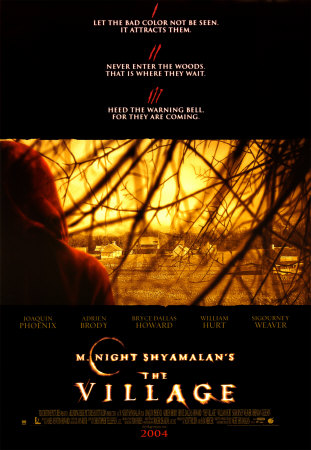
The Village is usually discussed through the obvious hooks first: the creatures, the woods, the red cloaks, the ending. Fair enough. The movie invites that. But every time I come back to it, I end up thinking less about the fear system and more about the women holding their nerve inside it.
That starts with Ivy Walker, of course, because the movie eventually bends toward her. But it is not only Ivy. Alice Hunt matters too, and so does the way the film lets female steadiness sit right beside male authority without feeling decorative or secondary. For all its talk of rules and protection, The Village keeps showing us that real courage in this world is often quieter than the men around it expect.
Ivy is not written as fragile, even when the village treats her that way
Ivy’s blindness makes some of the people around her talk to her as if she is delicate. The movie itself never buys that for a second.
What makes Bryce Dallas Howard so good here is that Ivy does not read as timid, saintly, or vaguely symbolic. She is playful. Direct. A little stubborn. She says what is in her head. The film’s own dialogue on the main Village page catches that immediately: she teases Lucius, presses him, and refuses to sit still inside the half-spoken social codes everyone else seems willing to live with. She is emotionally bolder than most of the village before the plot ever asks her to be physically brave.
That matters because it keeps her courage from feeling like a third-act convenience. Ivy does not suddenly become strong when the movie needs a heroine. She was strong from the start. The trip into the woods only reveals the form that strength was always going to take.
The movie quietly tells you it is her story
One of the most revealing bits in the old MTV cast interview is Shyamalan saying the film “became a kind of adult, emotional version of Little Red Riding Hood” and that the choice to make it a female lead was central to where the story went. That tracks. The Village is full of patriarchs, warnings, councils, and inherited fear, but the emotional line that cuts through all of it belongs to Ivy.
She is the character who keeps moving when everyone else starts organizing themselves around caution. She loves Lucius without turning that love into passivity. She is afraid, but fear does not make her smaller. If anything, it clarifies her. By the time she goes beyond the boundary the elders built, the movie is not asking whether she is capable. It is showing that she is the one person whose love is stronger than the village’s whole architecture of fear.
Alice Hunt brings a different kind of courage
Sigourney Weaver’s Alice does not get the big mythic framing Ivy gets, but she is one of the reasons the movie hurts the way it does. Alice is a mother in a community built on old wounds and constant vigilance. She understands the cost of the system more than many of the men speaking most confidently inside it.
There is something especially moving about how Weaver plays her. Alice is not loud. She does not posture. She carries grief, caution, and tenderness in the same posture. In a movie where so many characters are managing fear by turning it into structure, she feels like someone who knows structure cannot save you from every loss.
That is why the women in The Village do not come across as simple symbols of purity or comfort. They are not there to soften the men. They are living under the same pressure, and often seeing it more clearly.
Quiet courage is still courage
I think that is the part of The Village people can miss if they reduce it to its mechanics. This is a movie obsessed with fear, but it is just as interested in the forms courage takes when nobody is applauding. Ivy walking forward without sight is the clearest expression of that. Alice holding warmth inside a frightened community is another.
Even the film’s social texture points in this direction. The women are often the ones registering pain honestly while others are still trying to preserve order, preserve appearances, or preserve the story they have built about why the village must stay the way it is. That does not make the men irrelevant. It just means the emotional truth of the movie keeps landing in female hands.
Why this still feels like one of the film’s best choices
There are lots of reasons The Village has lasted with fans who respond to it. The score aches. The atmosphere still works. The romance has real softness in it. But I honestly think one of the smartest decisions Shyamalan made was letting the movie’s deepest form of bravery belong to women who do not announce themselves as warriors.
Ivy is not an action heroine dropped into a period thriller. Alice is not a speech-delivery machine there to explain the moral. They feel like women shaped by this strange, fearful little world, and then forced to show what kind of strength that world could not erase from them.
That is a big part of why The Village still lands for me. Under the warnings, rituals, and twist talk, it is carrying a very tender idea: sometimes the people who see most clearly are the ones everyone else has underestimated.