
********MAJOR SPOILERS********
The ending of The Village is not one surprise. It is a chain of revelations and reversals, and it works best when you follow Ivy through it rather than stopping at the headline twist.
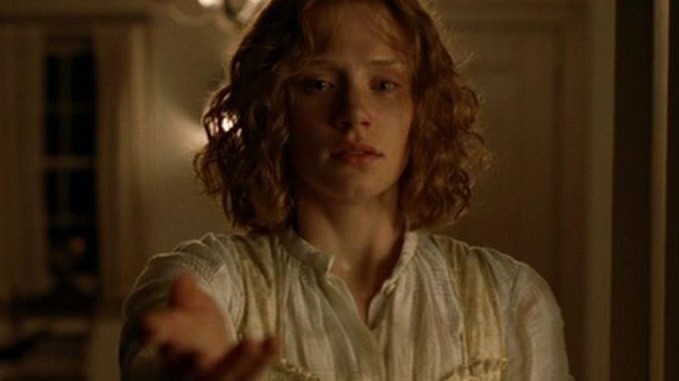
Everything starts with Lucius being stabbed by Noah. That is the immediate crisis. Lucius is dying. Medicine is needed. And the village has a problem it created for itself, because the medicine lies beyond the woods the elders taught everyone to fear. Right there, the system begins to crack. The people who built a life around control now have to send someone through the very boundary they used to keep everyone obedient.
Ivy goes because she loves Lucius, and because she is the one character in the film brave enough to move when everyone else freezes. Edward Walker gives her permission and gives her clues without fully shattering the world as she knows it. The elders open the forbidden storage shed. The red cloak comes out. The old machinery of fear is exposed, at least partially, from the inside.
Then Ivy enters the woods, and the movie becomes almost pure tension. She cannot see, which makes the audience feel every sound with her. She hears movement. She senses presence. She follows the path. And eventually Noah, wearing one of the creature costumes, follows after her. That detail matters because it collapses the village’s fake mythology into one damaged human body. The monster is not the woods. It is the village’s own lie walking toward her.
The scene at the pit is the real action core of the ending. Ivy reaches out. Waits. Lets Noah come toward her. Then sidesteps him and sends him falling to his death. It is not flashy. It is sharp. Cold. Effective. And it proves something important about Ivy. She is not brave because she has no fear. She is brave because she moves through fear with unusual clarity.
After that, she keeps going and reaches the wall. Climbs it. Drops over. And suddenly the entire frame of the movie changes. We are no longer in a sealed nineteenth-century world. There is a road. A ranger. Modern language. A preserve boundary. Modern vehicles. The village is not a surviving old settlement. It is a constructed refuge built by wealthy, grieving people who wanted to escape the violence of the modern world by faking a past and enforcing it through terror.
Ivy tells the ranger she needs medicine. He contacts his father, who knows the secret arrangement with the preserve founders and agrees to help. She takes the medicine back. So, on the immediate plot level, the ending does deliver a rescue. Lucius can live. Ivy succeeds.
But the ending does not flatten into triumph. Back in the village, the elders decide to continue the lie. That is the bitter part. They know the system has nearly collapsed. They know Noah became one of the monsters in literal form. They know fear has cost them dearly. And still they cling to the dream. Still they protect the fiction.
So the plain sequence is this: Lucius is stabbed, Ivy is sent for medicine, Noah follows her in the creature costume, she causes him to fall into the pit, she crosses into the modern world, gets the medicine, returns, and the elders choose to preserve the village’s illusion. The twist is only half the ending. The real ending is that the lie survives, even after courage exposes it.