
Wide Awake is one of the easiest M. Night Shyamalan films to skip when people map out his career. It came before the breakthrough. It does not have the same genre hook. It is not the title people pull out when they want to explain the public idea of “a Shyamalan movie.” But I think it matters more than it usually gets credit for.
Not because it secretly contains every later move in miniature. That is too tidy. It matters because the emotional questions that would keep pulling at him for years are already right there on the surface.
A child trying to make sense of death
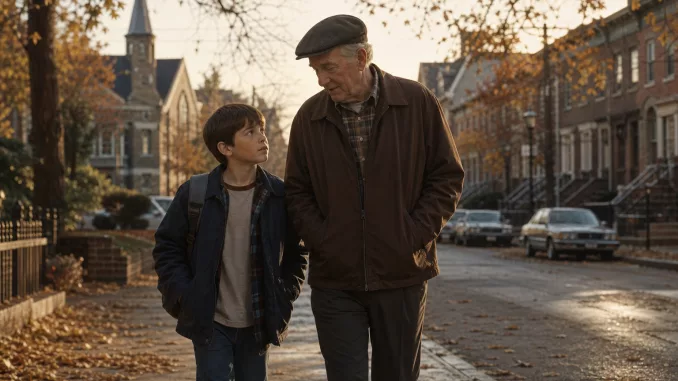
The movie’s center is simple and strong: a boy mourning his grandfather and trying to understand death, God, and what any of it means. That is not some small side concern that Shyamalan later traded away for higher-concept storytelling. It is one of the deepest through-lines in the whole filmography.
He would come back again and again to characters asking whether the world is empty, ordered, cruel, responsive, or some uneasy mix of all four. Wide Awake is already sitting in that territory. It just does it without the genre wrapper that would later make those questions look bigger, stranger, or more marketable.
The faith lane is already central
One thing I really like about Wide Awake is that it does not treat spiritual questions like decoration. The movie is plainly interested in belief, doubt, reassurance, and the ache that follows loss. You can draw a clean line from that to later films, but the tone here is gentler and less stylized.
That gentleness matters. It makes the searching feel immediate instead of designed. The movie is not trying to stage a grand metaphysical puzzle. It is watching a child ask the kind of painful questions adults spend whole lives dodging.
You can feel the softer side of Night’s work very clearly here
Shyamalan sometimes gets reduced to tension, reversals, and formal control. Fair enough. Those things are part of his work. But there has always been a softer current in his films too: family, vulnerability, guilt, protection, and the ache of wanting meaning to still be there after something has been taken away.
Wide Awake pushes that side of him right to the front. It helps explain the warmth people sometimes miss when they talk about the later career as if it were only about mechanics.
It does not need to be a hidden masterpiece to be revealing
I do not think you need to oversell the case. Wide Awake is not some buried flawless gem that suddenly unlocks everything. It is smaller than the films that came later, and you can feel that smaller scale all through it. But smaller is not the same thing as minor.
Sometimes an early film matters because it is polished. Sometimes it matters because it is revealing. This is the revealing kind. You can see what interests him before the larger filmmaking machine fully snaps into place.
Why it is still worth revisiting now
If you come back to Wide Awake after knowing the later career, it stops feeling like a strange prelude and starts feeling like an honest early sketch. Not the finished version, not the most powerful version, but an unusually clear one.
That is why I keep thinking about it. Not because it contains the full later Shyamalan in embryo, but because some of the things he cares about most are already there in the open, before the brand hardened around him.


Be the first to comment