
Signs gets filed under a lot of labels. Alien movie. Faith movie. Twist movie. Fair enough. It has pieces of all three. But the reason it still hits so hard, at least for me, is the grief sitting under every scene.
That is the real engine of the movie. The invasion plot gives the story pressure. The loss inside the Hess house gives it weight. Strip away the crop circles and the radio panic, and what you still have is a family trying to survive the shockwave left by one death.
Graham is not just doubting. He is wrecked.
People sometimes flatten Graham Hess into a simple description: former priest, lost his faith. That is true, but it is not enough. He is a widower who cannot stop circling the worst moment of his life. His crisis is not clean or intellectual. It is bitter, ugly, and unresolved.
That changes the feel of everything around him. He is not standing at a safe philosophical distance and pondering whether the universe has meaning. He is angry. He is tired. He is trying to move through a house that still feels full of his wife even though she is gone.
The family feels shaken in a way that never turns fake
One reason Signs still works so well is that the family never feels arranged just to serve the plot. They feel rattled. Merrill wants to help, but he does not really know how. The kids have habits and fears that can look quirky at first, but once you tune into the instability of the house, those details stop feeling random.
That is why the quieter scenes carry so much. The jokes are funny, but they are strained. The small arguments feel ordinary, but they are carrying more than they should. The movie understands that grief does not erase family life. It just makes every ordinary moment wobble a little.
The dinner scene is where the movie shows its hand
If I had to point to one scene that explains why Signs lasts, it would be the dinner breakdown.
The alien threat is outside, but the real collapse happens at the table. Everybody is frightened. Everybody is hungry. Everybody is pretending they can hold it together for one more hour. Then that effort just gives out. It is messy, sad, and a little humiliating in the way real family pain often is.
That scene tells you more than a lot of the movie’s overtly meaningful dialogue. It shows what fear looks like when grief has already hollowed the center out of a family.
Faith comes back through pain, not tidy logic
I think this is where some people misread the film. Signs is not strongest when you reduce it to a neat proof that everything happens for a reason. It lands harder when Graham’s return to belief feels rougher and more desperate than that.
He does not reason his way back into faith. He gets pushed there by crisis, memory, and the unbearable possibility that his wife’s final words were not meaningless after all. You can find that moving, frustrating, or a little of both. I think the movie is smart enough to allow all of those reactions.
Why the ending still divides people
The ending asks viewers to accept connection where coincidence had seemed more likely. Some people love that. Some absolutely do not. I get both responses.
But even if you argue with the mechanics, the emotional idea is easy to see. Graham has spent the whole film living as if the universe is empty and cruel. The ending offers him a way to imagine, maybe for the first time since his wife died, that loss did not get the last word.
Why Signs still stays with so many of us
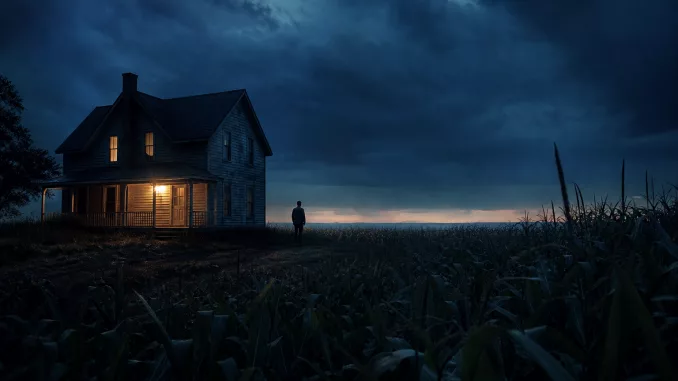
Signs stays with people because its fear has a bruise under it. The suspense is great. The atmosphere still works. The farmhouse unease is all still there. But the story keeps landing because it is really about a man left emotionally stranded after the person holding his life together was suddenly taken away.
That is the part I keep coming back to. The aliens make the movie memorable. The grief is what stays.




Be the first to comment